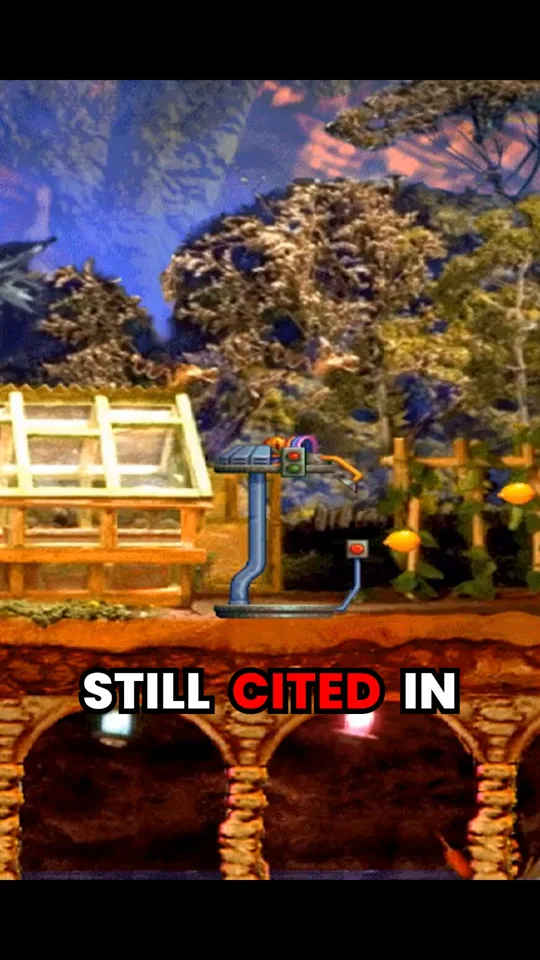
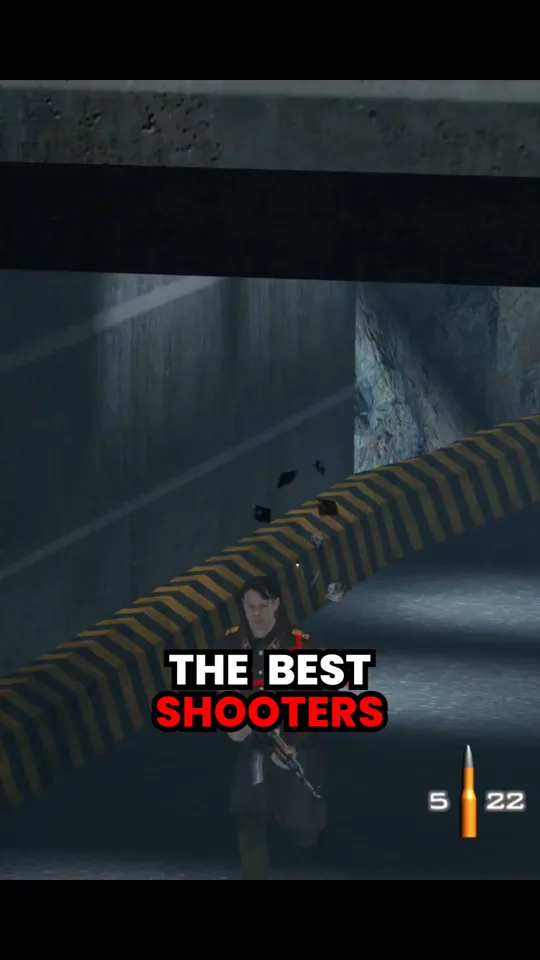
In a 1997 interview, the man who produced Abuse said he set out to prove that a person could sell 50,000 copies of a so-so game. He had just left the Doom and Quake team. Crack dot Com's side-scrolling shooter came out for MS-DOS on February 29, 1996. Electronic Arts published it in North America and Origin Systems in Europe. In 1997 the studio gave the code and the shareware data away. That decision is the reason the game still runs on a current PC.
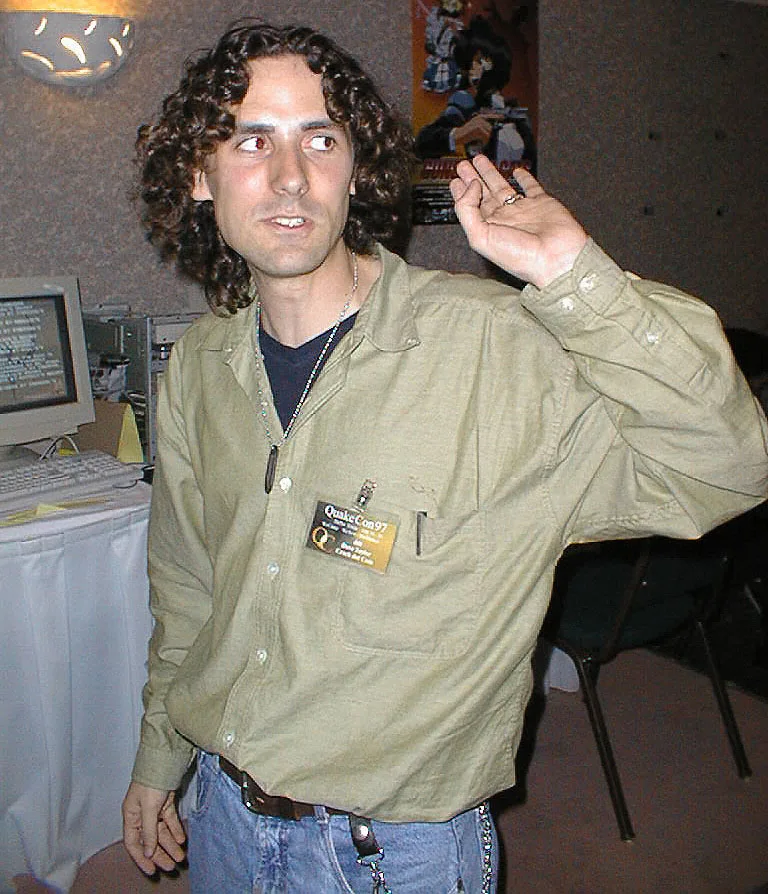
Dave Taylor left Doom's team to start Crack dot Com
Dave Taylor worked at id Software from 1993 to 1996. On Doom he was what he calls the "spackle coder": the status bar, the automap, level transitions, network chat and the cheat codes. On Quake he wrote the original sound engine and the MS-DOS TCP/IP library. He also ported both games to IRIX, AIX, Solaris and Linux. During long Doom sessions he used to faint from motion sickness. His coworkers outlined his unconscious body on the floor in masking tape.
In 1996 he left to found Crack dot Com, and Abuse became the only game the studio released. In that 1997 interview he also said he wasn't particularly proud of it. To me, selling 50,000 copies of a so-so game is an odd goal for someone fresh off Doom.
The studio's second game, Golgotha, a real-time strategy game with first-person shooter elements, never got finished. Crack dot Com shut down in 1998, and Taylor went to work at Transmeta until 2001.
Three people built Abuse in six months for $150,000
Taylor is credited as producer, Jonathan Clark wrote the code and Duong Nguyen did design and art, with Murray McMillan also on art. The game was in development for six months by three people on a budget of $150,000.
The story changed on the way. The original version was an invasion by an alien species called "ants," and you played a special ops agent sent into their hive to shut down its cooling system. The final release swapped it for the story of Nick Vrenna, a wrongly imprisoned man who is immune to a substance called Abuse. A hidden area with maroon tiles near the end of level 14 still hints at the ants.
Abuse ran on a Lisp variant and shipped with its level editor inside
You move with the keyboard and aim with the mouse, so the gun points wherever the cursor is while you run the other way. The rest is run-and-gun: swarms of mutants, switch puzzles and IPX/SPX network play.
Under the hood, the game logic was written in a variant of Lisp. The interface was undocumented. Few people built mods with it. The shareware 1.x Lisp API also broke compatibility with retail version 2.0.
The level editor got more use. It is fully usable from the game itself: you turn it on with a command-line parameter, press Tab to toggle it, and edit a level while you test it. Next Generation praised "an accessible level editor" in its review of the DOS original. The music and sound effects are Bobby Prince's, the composer who had already named a Doom II track "The Dave D. Taylor Blues".
The 1997 source release made the shareware data public domain
On July 12, 1997, Crack dot Com released the source code. The shareware assets went into the public domain, except for the music and sound effects owned by Prince. The registered version's levels and data stayed proprietary. EA, Bungie and other publishers were still selling commercial copies. Wikipedia puts the release about two years after launch.
The commercial versions were still spreading at the time. Crack dot Com's Oliver Yu ported the game to Mac OS, and Bungie published it on March 5, 1997, with graphics partly redrawn for 640x480. IBM had put out an AIX version in September 1996, distributed over FTP.
With the code out, the community took over. The first work was maintenance, such as making the game run over TCP/IP instead of IPX, and later work moved it to new systems.
From the 2001 SDL port to Abuse 2025
In 2001 the game was adapted to the SDL library, which lifted the 8-bit color limit and made porting easier. Ports followed for Windows, Linux, OS X, BeOS, Wii homebrew, OpenBSD and AmigaOS 4. An iPhone and iPod Touch version, Abuse Classic, came in 2009. In August 2011 the magazine Linux Format picked the open-source version as a "HotPick" in issue 147.
Sam Hocevar maintained the game until 2011, and in 2014 it moved to SDL2 and GitHub. In 2016, for the 20th anniversary, a community developer released a port with custom resolutions, OpenGL rendering, Xbox 360 controller support and fixed music.
Where to play it today
The current line is Abuse 2025, a GPL-2.0 fork of the Xenoveritas SDL2 port that also continues antrad's Abuse 1996 project. It targets Windows, macOS and Linux and lists high-resolution graphics, gamepad support, co-op and LAN deathmatch, and the built-in level editor. You build it yourself with CMake, SDL2 and SDL2_mixer. Multiplayer is not supported on Windows or between different platforms.
It ships with the base game's data, and those files come from sources with varying licenses. If you want only clearly licensed content, you can swap in the public domain subset of the original shareware. As of October 27, 2026, no store I could find sells the game.
Questions people ask
Can you still play the Abuse PC game on Windows?
Yes, through a source port rather than the DOS original. Abuse 2025 builds on Windows, macOS and Linux with CMake and SDL2, though its multiplayer does not work on Windows.
Is Abuse free?
The engine code and the shareware data are: Crack dot Com put the shareware assets in the public domain in 1997, minus Bobby Prince's music and sound effects. The registered version's levels stayed proprietary, and the forum post says the permission Clark and Taylor gave to distribute them with a Windows port is not part of the public domain release.
Is there an Abuse remake?
Not a remake. What exists are ports and forks of the original code. The 2016 anniversary port added OpenGL rendering, custom resolutions and Xbox 360 controller support, and Abuse 2025 continues from the SDL2 port of 2014.
Does Abuse run on Linux?
Yes. Wikipedia lists the February 1996 shareware release for both MS-DOS and Linux, with a Linux date of October 11, 2011 in its infobox for the open-source version. Abuse 2025 lists Linux too and keeps its data under ~/.local/share/abuse/data.
When was Abuse released?
It came out for MS-DOS on February 29, 1996, through Electronic Arts and Origin Systems, and Bungie published the Mac port on March 5, 1997. Some sites list the game as 1995, but the release date on Wikipedia is 1996.
Sources
- Abuse (video game) - Wikipediaen.wikipedia.org
- Dave Taylor (game programmer) - Wikipediaen.wikipedia.org
- Abuse by Crack dot Com - Duke4.net Forumsforums.duke4.net
- Abuse (computer game) - Wikipedia, 2007 Schools edition mirrorwikipedia2007.classicistranieri.com
- Golgotha (video game) - Wikipediaen.wikipedia.org
- apancik/Abuse_2025 - GitHubgithub.com