Lucasfilm Games built Habitat for the Commodore 64, and the dial-up service Quantum Link put it into beta in the second quarter of 1986. It is the game where "avatar" picked up its online meaning: Randy Farmer, one of its two lead designers, says that "Chip coined the modern usage of the word Avatar". Players walked cartoon bodies through a town and talked in word balloons. The designers expected to run the place. The players broke the economy and split 50/50 on whether murder should be allowed.
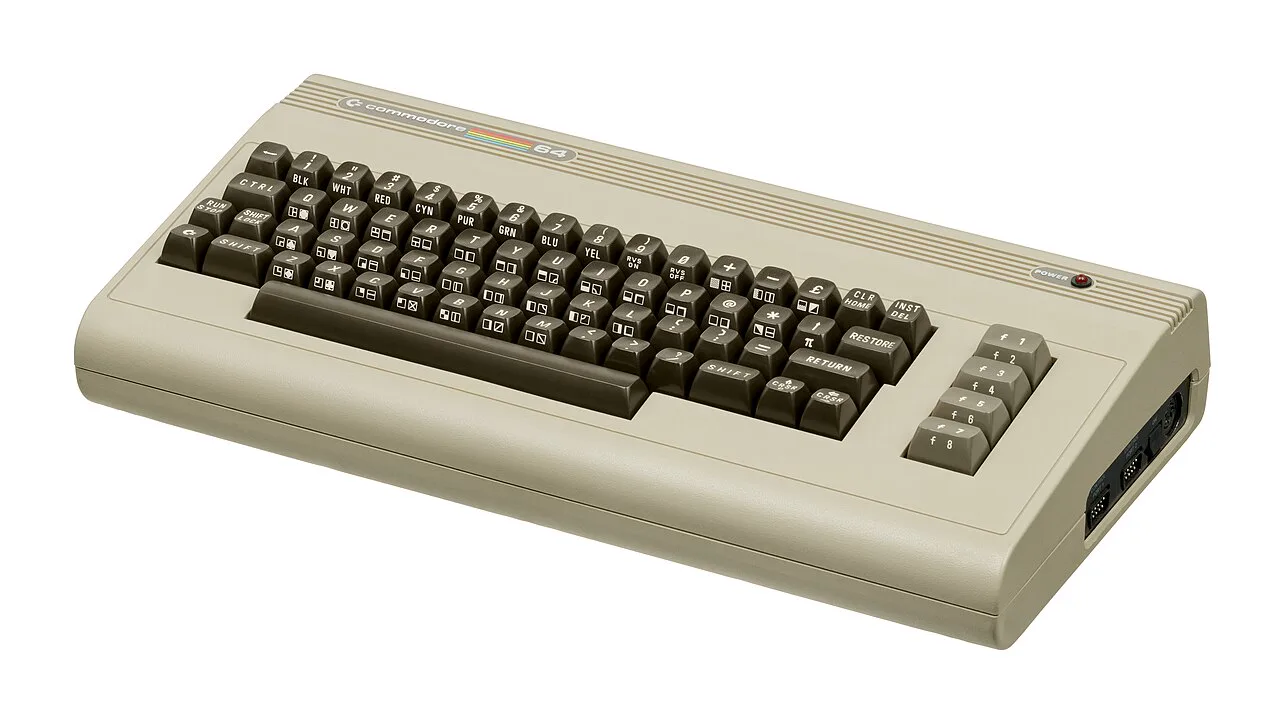
Two designers built Habitat in 64K of RAM
Chip Morningstar and Randy Farmer created Habitat with Aric Wilmunder and Janet Hunter. Farmer remembers the working name as Microcosm, which was dropped for sounding "like some sort of science experiment". The Commodore 64 was chosen for business reasons, not technical ones.
Farmer later wrote that they built the first virtual world in "64k of ram, 100k of disk, and modems that could send only 30 characters per second", and added: "Ignorance of the impossible was the only way we beat these requirements." Thirty characters a second is 300 baud, the speed the design had to work at. Packet delays ran from 100 to 5,000 milliseconds. Quantum Link itself offered speeds up to 2400 baud.
Some Commodore 64 chips crashed at the chip level, and Farmer's verdict on the machines is "No two alike!" Someone at Electronic Arts suggested he spray the display chip with freon and watch Habitat crash. Quantum Link was based in Vienna, Virginia, on the other coast from the team.
Habitat shared its animation engine with another Lucasfilm Games title. Labyrinth and Habitat used the same core code, written by Charlie Kellner, Wilmunder and Ron Gilbert, and Maniac Mansion started from much of it before switching to a scripting engine. Farmer says the team hand-built only a few hundred unique locations and generated each new avatar's personal "turf" from templates.

About 500 testers broke the economy and split 50/50 on murder
The world was designed for 20,000 avatars, with room for 50,000. The beta ran with about 500 testers, and the team's own paper says the world outgrew what they could manage when only about 50 players had joined. Each avatar started with 2,000 Tokens and received 100 more for every daily login. Wilmunder added avatar customization, eventually more than one hundred heads, sold in vending machines and handed out as quest rewards. I think that is the most modern thing in the whole design: a cosmetics shop, 1986, on a 300-baud line.
A doll sold for 75 Tokens in a vending machine and pawned for 100. A crystal ball sold for 18,000 and pawned for 30,000. Players shuttled objects between the two machines. The money supply had quintupled overnight. The operators let the new money stand.
The team ran a treasure hunt, the D'nalsi Island Adventure. One player found the key clue in 15 minutes and solved it in about eight hours. Operators then staged the Dungeon of Death themselves, playing the characters DEATH and THE SHADOW. A regular player took their special gun. The operators negotiated its return for 10,000 Tokens in a public exchange.
Violence was the harder problem. Avatars could steal from each other and shoot each other, and a dead avatar teleported home "head in hands" with its pockets emptied. A poll on whether murder was a crime split 50/50. The compromise was that weapons stopped working in town. The community also elected a sheriff without being asked, and a Greek Orthodox priest founded the Order of the Holy Walnut, a church whose canons banned weapons, theft and violence.
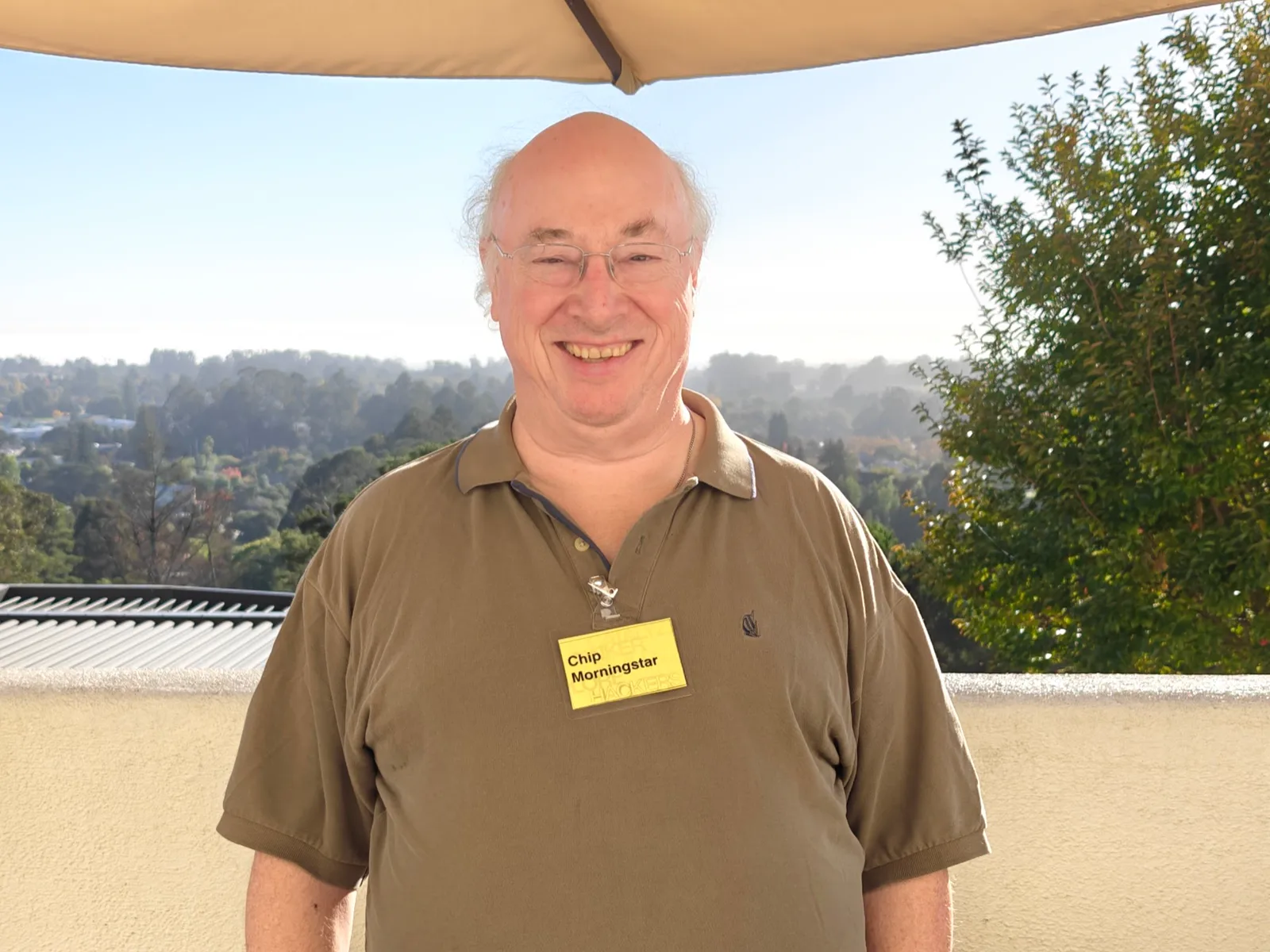
Morningstar coined "avatar" for Habitat
The word is older than the game. It comes from a Sanskrit term for "descent" and links to the Hindu god Vishnu, who took animal or human form to defeat evil. What Habitat added was the online sense: a body on screen that stands in for a real person among other real people. Morningstar is credited with coining it for that use.
The word did not win everyone over at first. Farmer says marketing staff at his later company, Communities.com, bristled at the foreign-sounding word. He knew it had stuck when Felicia Day recorded "Do You Want To Date My Avatar?" Morningstar has said he is variously gratified, amused, and dismayed by how the word has evolved.
Lucasfilm ended the pilot in 1988 and the engine lived on
The original service ran from 1986 to 1988 and closed because it was too costly to be viable. Quantum Link had launched on November 5, 1985 for the Commodore 64 and 128 at $9.95 a month, plus six cents a minute in its premium areas. The company behind it, Quantum Computer Services, later became America Online.
Habitat then came back in a smaller form. Lucasfilm released Club Caribe on Quantum Link to recoup the development cost. Farmer says "almost all of the fantasy and combat elements were stripped out" and that Quantum wanted the changes. Morningstar called it "Club Metaphor." The paper puts Club Caribe at about 15,000 participants.
Fujitsu licensed the software and released Fujitsu Habitat in Japan in 1990. A third descendant, WorldsAway, launched on CompuServe in 1995 with no code from Habitat. The VZones worlds that carried it on closed in August 2014. Farmer and Morningstar received a First Penguin Award at the 2001 Game Developers Choice Awards. Farmer helped build WorldsAway and later worked with Morningstar again at Yahoo! until 2008.
You can play Habitat today through NeoHabitat
In 2016 the Museum of Art and Digital Entertainment emulated the Commodore 64 and Q-Link systems, and the source code went onto GitHub under the MIT license in July of that year. Farmer announced NeoHabitat in February 2017, an open-source revival that restored the original town of Populopolis.
The genuine 1986 Commodore 64 client runs in a browser emulator on the NeoHabitat home page, and a faster all-JavaScript client works in a browser and on phones. A desktop package bundles the VICE emulator for Windows, Mac and Linux, and the client also runs on an Ultimate 64 or on a real Commodore 64 with a disk drive and a WiFi userport modem. After logging in you arrive in downtown Populopolis. The browser clients include a guide called the Docent for learning the controls.
The GitHub page warns that NeoHabitat is still in development and can be unstable. For the original, the Internet Archive hosts an 8-minute-22-second Lucasfilm and Quantum Link demo from 1986, put together by Morningstar and licensed CC BY 3.0. A Habitat meetup on February 16, 2024 was filmed without commentary.
Questions people ask
Was Habitat the first MMO?
It is usually called the first graphical one. The NeoHabitat page calls it "the world's first graphical MMO", and Wikipedia describes it as the "first attempt at a large-scale commercial virtual community that was graphic based". Text-only shared worlds came first: MUD1 was created in 1977.
Can you play the Habitat game online?
Yes, through NeoHabitat. Its home page links to two browser clients that need no install, one of them the original Commodore 64 client in an emulator. The project warns that it can still be unstable.
Can you download Lucasfilm's Habitat?
The NeoHabitat page offers a desktop package with the VICE emulator for Windows, Mac and Linux. It connects to the NeoHabitat server, since Habitat was always an online world. The original source code is on GitHub under the MIT license.
What was Fujitsu Habitat?
It was the Japanese version. Fujitsu licensed the software in 1988 and launched Fujitsu Habitat in 1990. It also worked with Electric Communities on WorldsAway, which launched in 1995.
How many people played Habitat?
The 1986 beta had about 500 testers. The Club Caribe version that followed had about 15,000 participants.
Get the game.
Sources
- The Lessons of Lucasfilm's Habitatfudco.com
- Habitat (video game) - Wikipediaen.wikipedia.org
- Habitat (1986-1988) - Rest in Pixelsrip.so
- Quantum Link - Wikipediaen.wikipedia.org
- Lucasfilm Games - Wikipediaen.wikipedia.org
- What Avatar Creators Chip Morningstar and Randy Farmer Trace Ancient Roots of the Latest Hitheritage-key.com
- VC&G Anthology Interview: F. Randall Farmer, Co-Creator of Lucasfilm's Habitatvintagecomputing.com
- NeoHabitat (GitHub)github.com
- NeoHabitat home page and play optionsfrandallfarmer.github.io
- MUD - Wikipediaen.wikipedia.org
- MUD1 - Wikipediaen.wikipedia.org
- Lucasfilm & Quantumlink: Introducing Habitat (Internet Archive)archive.org
- Footage of Lucasfilm Games MMO Habitat Meetup on Feb. 16, 2024 (No Commentary)youtube.com