Dragon Age: Origins came out in November 2009. BioWare's Edmonton studio developed it and Electronic Arts published it. It was the first Dragon Age game, and it took about seven years to get from a first demo in 2002 to release. Partway through, a programmer's random name generator gave it its title, and that title forced the writers to put dragons into a world that had none. On October 21, 2026, EA confirmed it is closing BioWare.

Dragon Age: Origins took from 2002 to 2009 to make
Work on the first demo began in November 2002, and BioWare wanted a spiritual successor to Baldur's Gate and Neverwinter Nights. The game was shown at E3 2004 under the plain title "Dragon Age". Full-scale production began three years later, and by the end more than 180 people worked on it. The team started on the Neverwinter Nights engine and switched midway to BioWare's own Eclipse Engine, which slowed development.
The first draft had no darkspawn and no Grey Wardens, the game's enemy and the order the player joins. BioWare planned twelve origin stories and kept six. It re-revealed the game as Dragon Age: Origins in July 2008, about sixteen months before release, and brought in Edge of Reality for the console versions.
A random name generator replaced Chronicles
According to lead environment artist Ian Stubbington, the working title was "Chronicles," which the team did not like much. In his words, "it was decided that one of the coders would make a quick random name generator". The coder filled it with fantasy terms. The team voted on what came out and picked "Dragon Age." Lead writer David Gaider found the winner pretty generic.

The game had no dragons until the name demanded them
More than a year into development, the game had no dragons. Gaider asked: "Why would you call it 'Dragon Age' when the actual age of dragons was centuries previous?" He took it to James Ohlen, who told him to change the story and the setting to match the title. Gaider later described the result as "very much the tail wagging the dog."
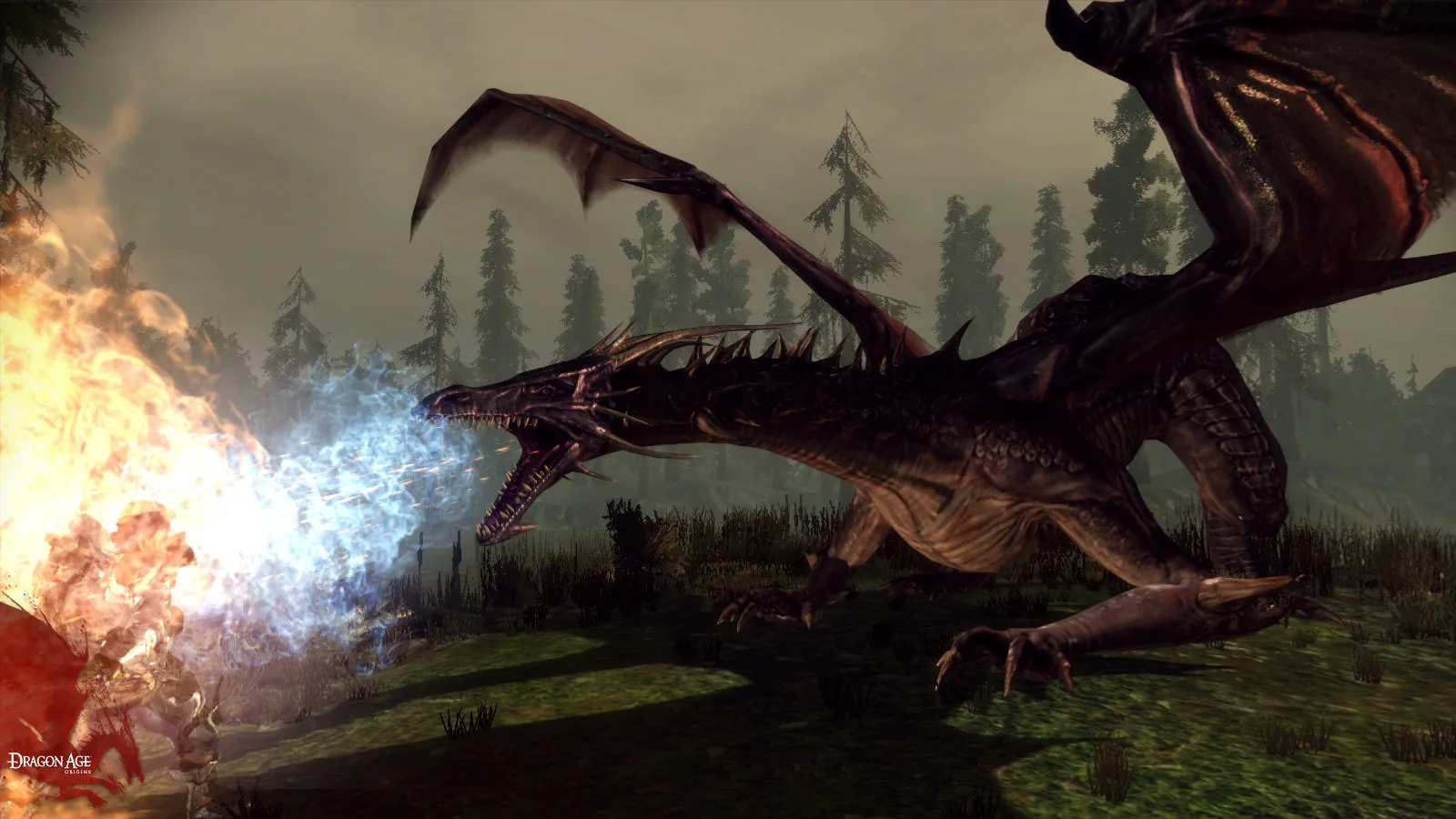
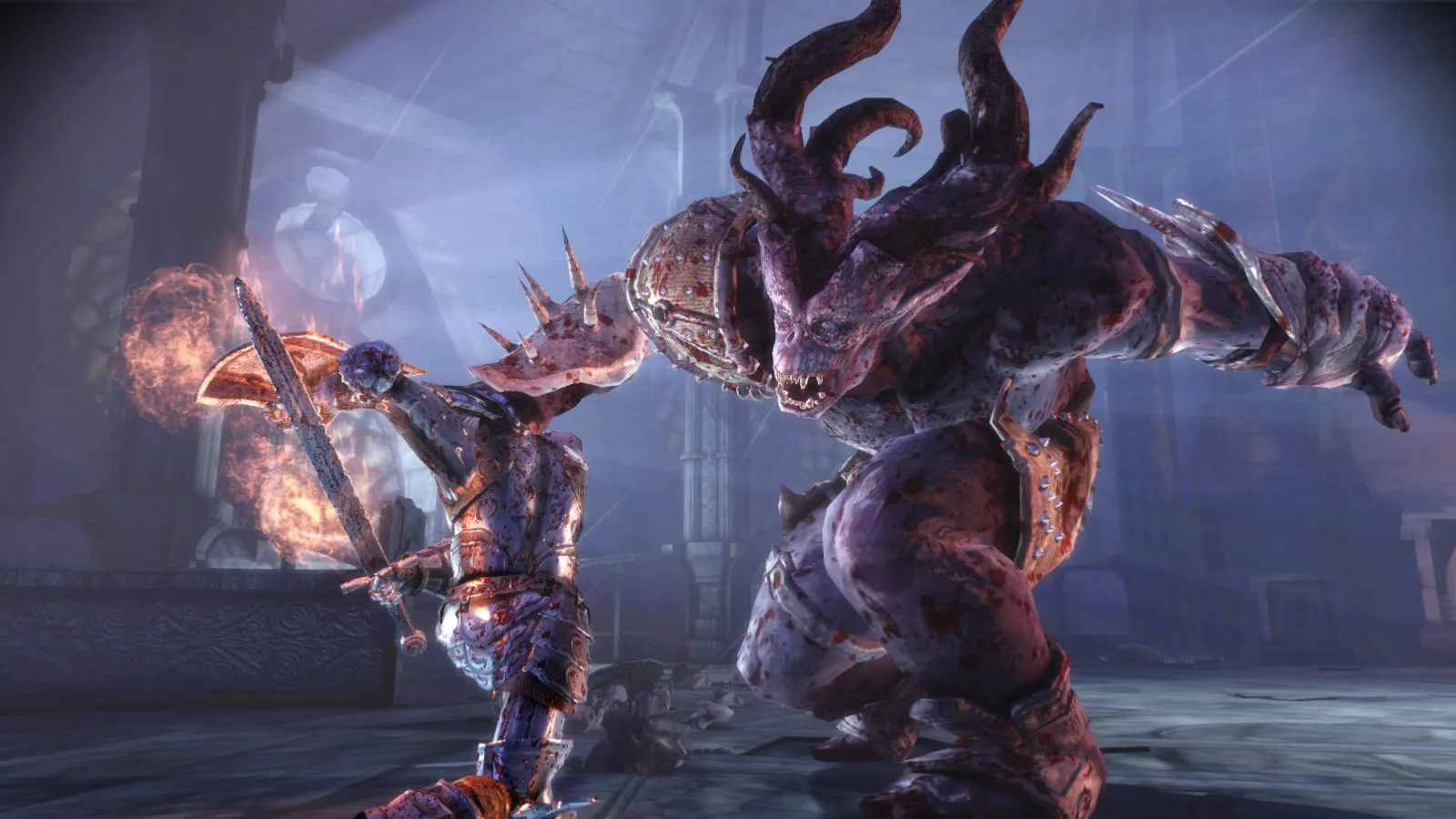
Dan Tudge, the game's creative director, offered a different reading of the name. He said it was meant to echo the Bronze Age or the Iron Age. The team had not realized players would expect dragons. Smaller dragons went in late, and so did the Archdemon, the dragon that leads the final battle. Managing editor Daniel Erickson remembered the original Archdemon as "Lovecraft does Final Fantasy."
Nine ages explain the name
Gaider's fix was to write a calendar, so that the present could be the Dragon Age. In the game the Chantry, the setting's religion, counts time in ages. The list in Game Informer's timeline of Thedas runs Divine, Glory, Towers, Black, Exalted, Steel, Storm, Blessed and Dragon. The dates are written as age and year, so 9:30 means year 30 of the Dragon Age.
The name comes from 8:99, the last year of the Blessed Age. Dragons had been thought extinct since the Nevarran dragon hunters, almost three centuries earlier. Then a high dragon was spotted on a feeding rampage over the Frostback Mountains. The Chantry named the next century the Dragon Age.
Origins has over 740,000 words of dialogue and 144 voice actors
BioWare's production figures from February 2010 put the dialogue at 742,000 words, against 80,000 to 100,000 for an average novel. The Lord of the Rings trilogy comes to 481,103 words.
The game has 68,260 lines of character dialogue, where BioWare says the average movie has 3,000. 144 voice actors worked on the English version, and the recorded audio runs to 54.1 hours played back to back. Inon Zur's score was played by a 44-piece orchestra recorded twice and merged, so it sounds like 88 players.
A full QA pass by an experienced lead took more than 90 hours. With cheats to skip the dialogue, the fastest internal run took just over 12. Bruce Venne, one tester, logged nearly 1,958 hours on the PC version across 5,352 games. In the final year the team fixed 4,212 different crashes, and co-founder Ray Muzyka put in 385 hours himself, filing 311 bugs.
EA reported in February 2010 that more than 3.2 million copies had shipped, a little over three months after release. That counts copies sent to retailers, not copies sold to players.
Questions people ask
What is the story of Dragon Age: Origins?
In 9:30 Dragon, the darkspawn rise in Ferelden in the Fifth Blight, led by the Archdemon Urthemiel. The player is a Warden who has to defeat it in Denerim.
When did Dragon Age: Origins come out?
On November 3, 2009, in North America, for Windows, Xbox 360 and PlayStation 3. Australia and Europe followed in the first days of November, though the PlayStation 3 release in Australia slipped to November 19. The Mac version, made by TransGaming, arrived on December 21, 2009.
Why is it called Dragon Age?
A random name generator produced it and the team voted for it, before the story had any dragons. The writers then added dragons and a calendar of nine ages. The last, the Dragon Age, is named after a high dragon sighted in 8:99.
Is Dragon Age: Origins the first Dragon Age game?
Yes. It was the first game in the series, and BioWare had shown it at E3 2004 as simply "Dragon Age" before the subtitle was added in 2008. BioWare's last release was Dragon Age: The Veilguard in 2024. The studio is now closing.
Sources
- Here's how Dragon Age originally got its name (NME)nme.com
- Dragon Age: Origins (Wikipedia)en.wikipedia.org
- News Tidbits: Dragon Age: Origins (Game Informer, February 25, 2010)gameinformer.com
- Dragon Age II: Timeline of Thedas (Game Informer, July 14, 2010)gameinformer.com
- EA shuts down legendary RPG developer BioWare (Nintendo Life)nintendolife.com
- Word counts of popular books (Word Counter Tool)wordcountertool.net