OnLive was a cloud gaming service that opened on June 17, 2010, developed and run by OnLive, Inc. of Palo Alto. Every game executed on the company's servers and reached the player as video. A cheap laptop or a small box on a TV could play titles that normally needed a gaming PC. The service was switched off in 2015. By then it had already been sold once, for $4.8 million.
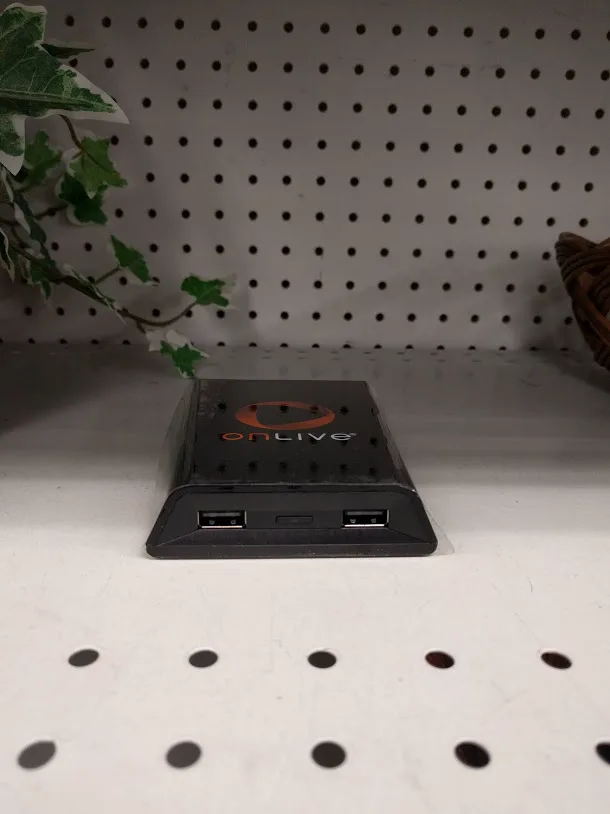
OnLive ran Crysis on a Mac laptop at GDC in March 2009
OnLive came out of Rearden, the Silicon Valley incubator run by Steve Perlman, who had helped develop the QuickTime video format at Apple. In an Engadget interview at GDC 2009 he put the development time at seven years: "OnLive took seven." For a long stretch of that, he said, "we were making incremental progress, but we just didn't know whether we could." He also told Engadget that players on cable and DSL "really need to be within 1,000 miles" of a server center, and that skeptics "damn well better be skeptical."
Perlman showed OnLive at the Game Developers Conference in San Francisco in March 2009, with 16 high-end games running. The promise was that a player needed no gaming hardware: any Windows PC or Mac would do, and a MicroConsole would plug into an HDTV. A 1.5 Mbps connection would give Wii-level picture quality, and 4 to 5 Mbps would be needed for HD. The MicroConsole was expected to cost less than a $250 Wii. EA and Ubisoft were among the nine publishers on board.
On stage, Perlman played Crysis on a simple Mac laptop and on a micro-console that "does almost no computing". CNET watched the demo on two computers and an HD TV and wrote that game play was "as smooth and lag-free as advertised." GameDaily had reported a latency of 1 millisecond from the show. That figure covered video encoding and decoding, not the trip across the internet.
OnLive went on to raise more than $200 million. Early investors included Warner Bros., Autodesk and Maverick Capital. AT&T, Lauder Partners, British Telecom and Belgacom came in later.
OnLive opened with 23 games and a free first year
Founding Member signup ran from June 15 to July 15, 2010. Through AT&T, the first year was free and a second year cost $4.95 a month. TechCrunch counted 23 launch titles and named nine: Assassin's Creed II, Batman: Arkham Asylum, Borderlands, Dragon Age: Origins, Just Cause 2, Mass Effect 2, NBA 2K10, Prince of Persia: The Forgotten Sands and Splinter Cell: Conviction.
The business model changed within four months. Subscription fees were dropped on October 4, 2010. The PlayPack plan later offered unlimited access to a rotating catalog for a monthly fee. Pre-orders for the OnLive Game System, the MicroConsole with a wireless controller, began on November 17, 2010. At launch the Game System cost $99 and shipped on December 2. It upscaled the stream to 1080p. Buyers got a free game through the end of 2010. The service needed at least 2 Mbit/s, and 5 Mbit/s or more was recommended. Connections had to be wired at first, and a Wi-Fi beta arrived on September 15, 2010. The UK launch followed on September 22, 2011, with BT broadband bundles.
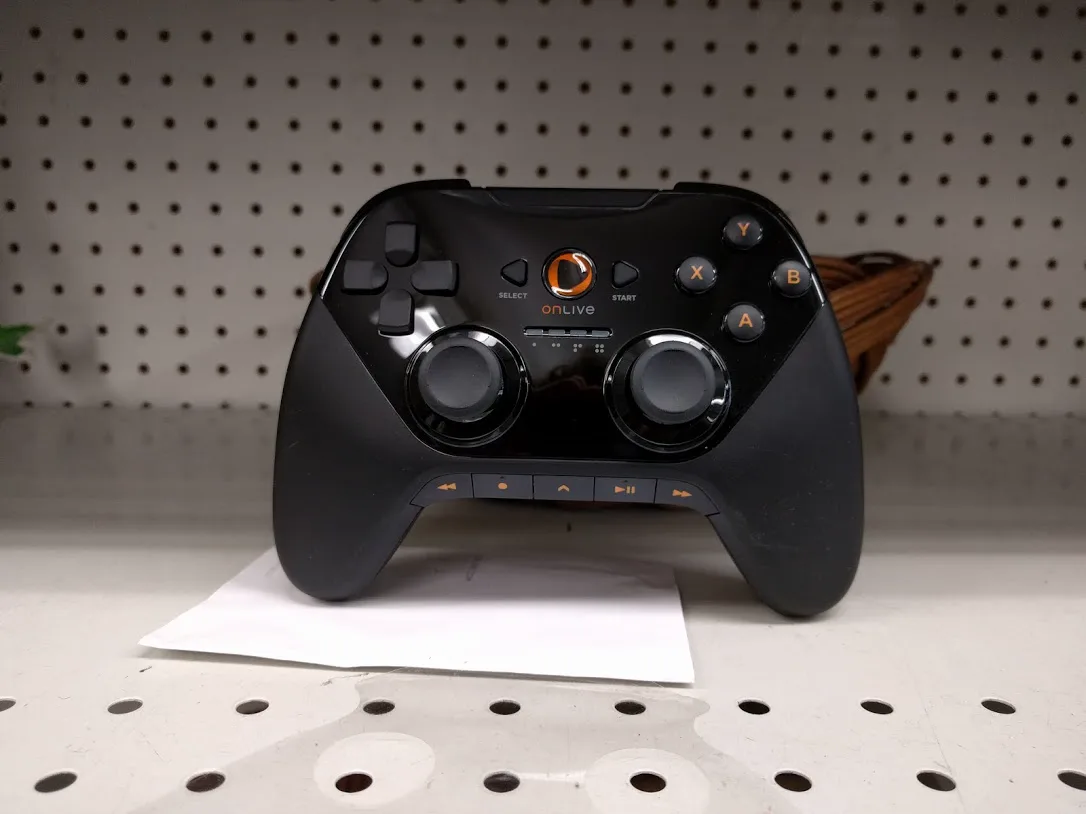
Digital Foundry measured about 150 ms of lag
OnLive had promised 35 to 80 milliseconds between a button press and the action on screen. Digital Foundry measured about 150 ms in Unreal Tournament III and 150 to 216 ms in DiRT 2 and Assassin's Creed II. Those figures came from one PC on one internet connection.
Lag was not the only complaint. Kotaku's retrospective said the library was small next to physical stores and Steam and that the MicroConsole needed wired Ethernet. It also noted that OnLive never shipped an iOS version.
About 1,800 players at peak against two million sign-ups
In January 2012 OnLive Desktop streamed a Windows desktop to the iPad. The free account came with 2 GB of storage and access to Word, Excel and PowerPoint. A $9.99-a-month Pro tier was announced for later. In March 2012 Microsoft said the service violated the Windows 7 license.
A source told Engadget that OnLive averaged around 1,800 concurrent users at peak. The company claimed two million users, a count that included everyone who had ever signed up. It employed 180 to 200 people before the restructuring on August 17, 2012. Fewer than half were offered jobs at the successor company.
The restructuring ran through California's Assignment for the Benefit of Creditors, which wiped out the equity of investors, Perlman and employees. On August 23 the San Jose Mercury News put OnLive's debt at $30 million to $40 million. A spokesman later said the estimate was too high. GamesBeat put the debt at $18.7 million. Creditors expected no more than 26 cents on the dollar.
The assets went to a company owned by the investor Gary Lauder for $4.8 million. Before the collapse, Justin Byers of VCExperts had worked out from a funding filing that the company could be worth as much as $1.8 billion. "We are not saying that is the valuation," Byers said. Perlman stepped down as CEO on August 27, 2012.
CloudLift in 2014, then Sony in 2015
The company came back in March 2014 with a different product. CloudLift cost $15 a month and streamed Steam games a player already owned to Android devices, low-end laptops and supported TVs. Lauder led the relaunch, and Mark Jung, a former IGN CEO, served as executive chairman.
In the first days of April 2015 OnLive said that Sony Computer Entertainment was buying its remaining patents and assets. The game service closed on April 30, and all player data was deleted that day. Steam games bought through OnLive stayed on Steam.
Where to stream games now
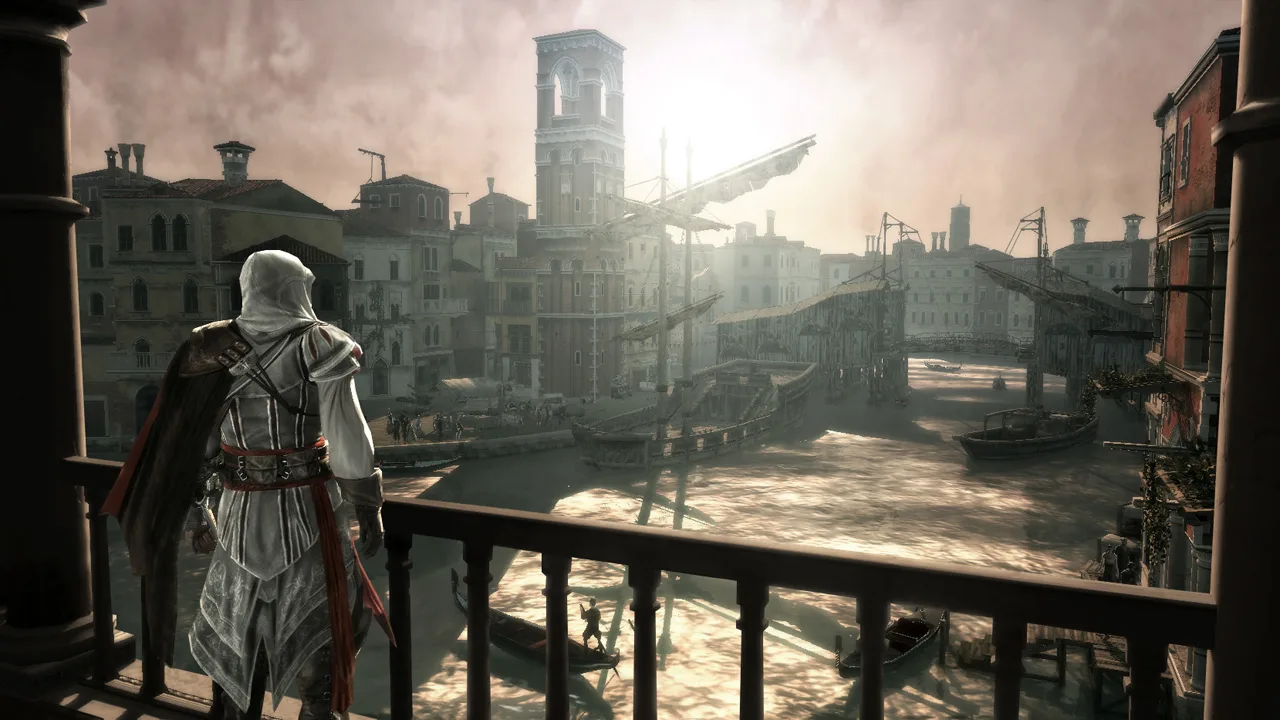
To me CloudLift aged best of everything OnLive tried. GeForce NOW works the same way today. It lets players link Steam, Epic, GOG, PC Game Pass and Ubisoft Connect and stream what they own. Its catalog lists more than 4,500 PC games. Xbox Cloud Gaming has a "Stream your own game" option for select titles. Ubisoft Montreal's Assassin's Creed II, an OnLive launch title, came out on Steam on March 4, 2010.
Questions people ask
What was the first cloud gaming service?
OnLive was not the first. G-cluster introduced its product at E3 in 2000 and released it around 2003. OnLive was revealed at GDC in March 2009 and launched in June 2010. Gaikai was a rival, and Sony bought it in 2012.
Is OnLive still around?
No. The game service closed on April 30, 2015, and Sony took the patents. Sony's PlayStation Now was built on the technology of Gaikai, the other streaming company it had bought.
What games were on OnLive?
Nine of the 23 launch games are named in the launch announcement, from Borderlands to NBA 2K10. Later additions such as NBA 2K12 grew the catalog, though it stayed small next to Steam.
Does the OnLive console still work?
Not as a game console. The MicroConsole worked by decoding a stream from OnLive's servers, and all OnLive services ended on April 30, 2015.
Why did OnLive fail?
Digital Foundry measured about 150 ms of lag against a promised 35 to 80 ms. OnLive had around 1,800 concurrent players at peak. The company laid off most of its staff in August 2012 and sold its assets for $4.8 million.
Get the game.
Sources
- Engadget: OnLive killed the game console starengadget.com
- OnLive at GDC 2009 (raanan.com)raanan.com
- MIT Technology Review: Moving video games to the cloudstechnologyreview.com
- Engadget: GDC09 interview, OnLive founder Steve Perlman wants you to be skepticalengadget.com
- TechCrunch: OnLive cloud gaming service goes live June 17techcrunch.com
- OnLive (Wikipedia)en.wikipedia.org
- Engadget: OnLive MicroConsole official at $99engadget.com
- PCWorld: OnLive Desktop brings Windows 7 and Microsoft Office to the iPadpcworld.com
- Kotaku: OnLive's lag tested with sciencekotaku.com
- Kotaku: What went wrong with OnLivekotaku.com
- Engadget: OnLive CEO showed no remorse when announcing layoffsengadget.com
- GamesBeat: OnLive timelinegamesbeat.com
- GamesBeat: OnLive's assets were sold for only $4.8 milliongamesbeat.com
- GamesBeat: Is cloud gaming service OnLive really worth $1.8B?gamesbeat.com
- Game Developer: OnLive is back with new business model, new leadershipgamedeveloper.com
- Engadget: Sony buys OnLiveengadget.com
- Cloud gaming (Wikipedia)en.wikipedia.org
- Assassin's Creed 2 on Steamstore.steampowered.com
- Xbox: playxbox.com
- NVIDIA GeForce NOWnvidia.com