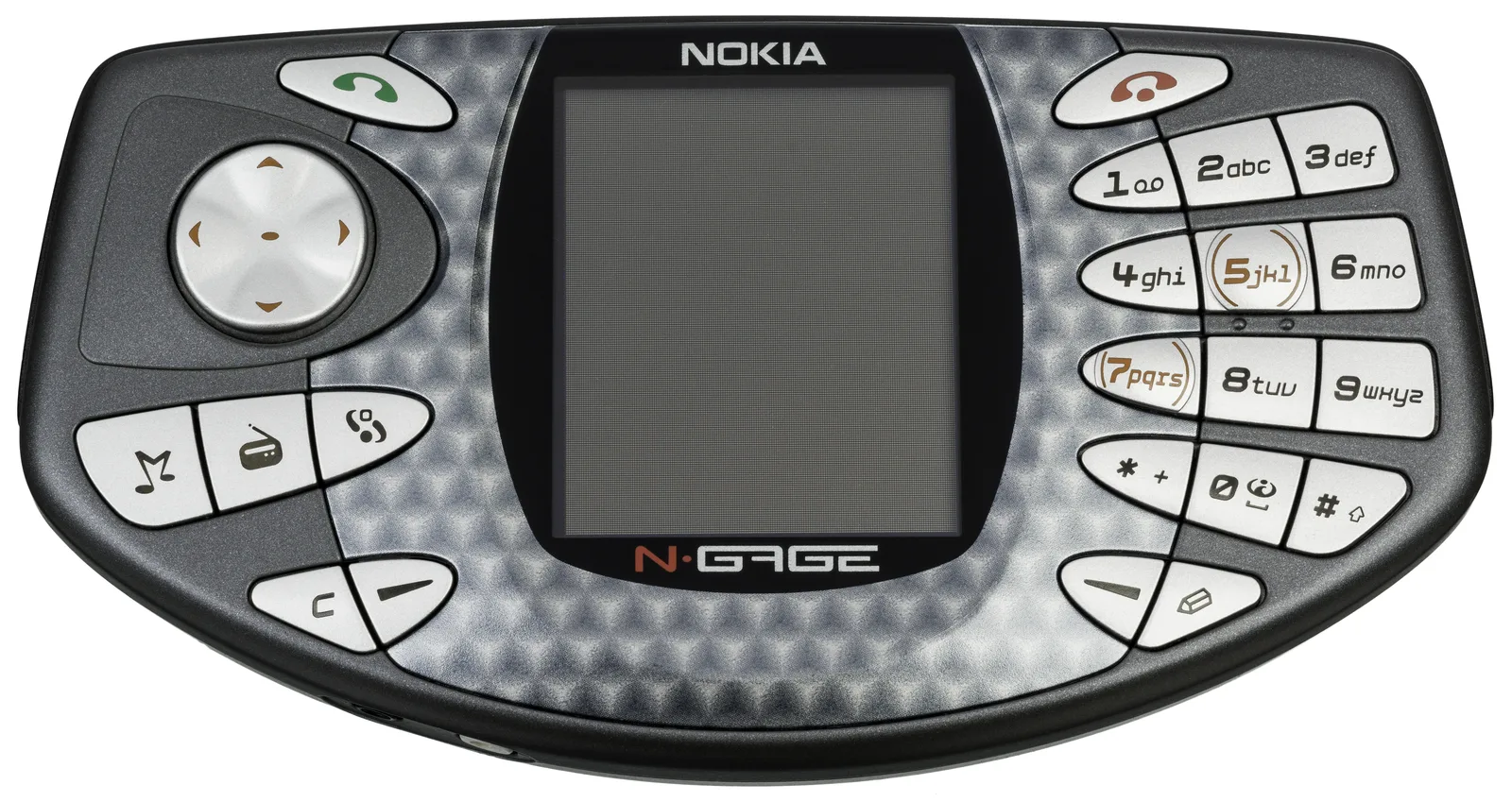
The Nokia N-Gage is a phone and a handheld game console in one body, and it went on sale on October 7, 2003. To make a call you held it edge-on against your cheek. Players called it the "taco phone." It cost $299 while the Game Boy Advance it was chasing sold for $99.99. Nokia counted phones shipped to stores as sales. The original and the 2004 QD together reached about 3 million units, half of the 6 million Nokia projected.
Nokia built the N-Gage to pull players off the Game Boy Advance
Nokia showed the N-Gage at the Mobile Internet Conference in Munich on November 4, 2002. Its internal codename was Starship, and its budget passed $100 million. Nokia pitched one device to replace the phone and the handheld people already carried. Eidos, Electronic Arts, Sega, Gameloft, Activision and Taito signed on as publishers.
Nokia's own message was less clear. In March 2003, Ilkka Raiskinen, senior vice president of entertainment and media, said the N-Gage was not a competitor to the Game Boy Advance and that the phone function would reach an older player than Nintendo's. A year later, as head of games, he told GamesIndustry.biz that Nokia's hardware followed business concerns. His line was that creating an optimal games device is easy, with a "big screen, lots of horsepower, big battery." The N-Gage had none of the three. It had to be a phone first.
The sideways call looked silly enough that people started posting sidetalking photos, first with the N-Gage and then with any old electronic thing held to their ear, until it was a meme of its own.
Swapping a game meant removing the battery
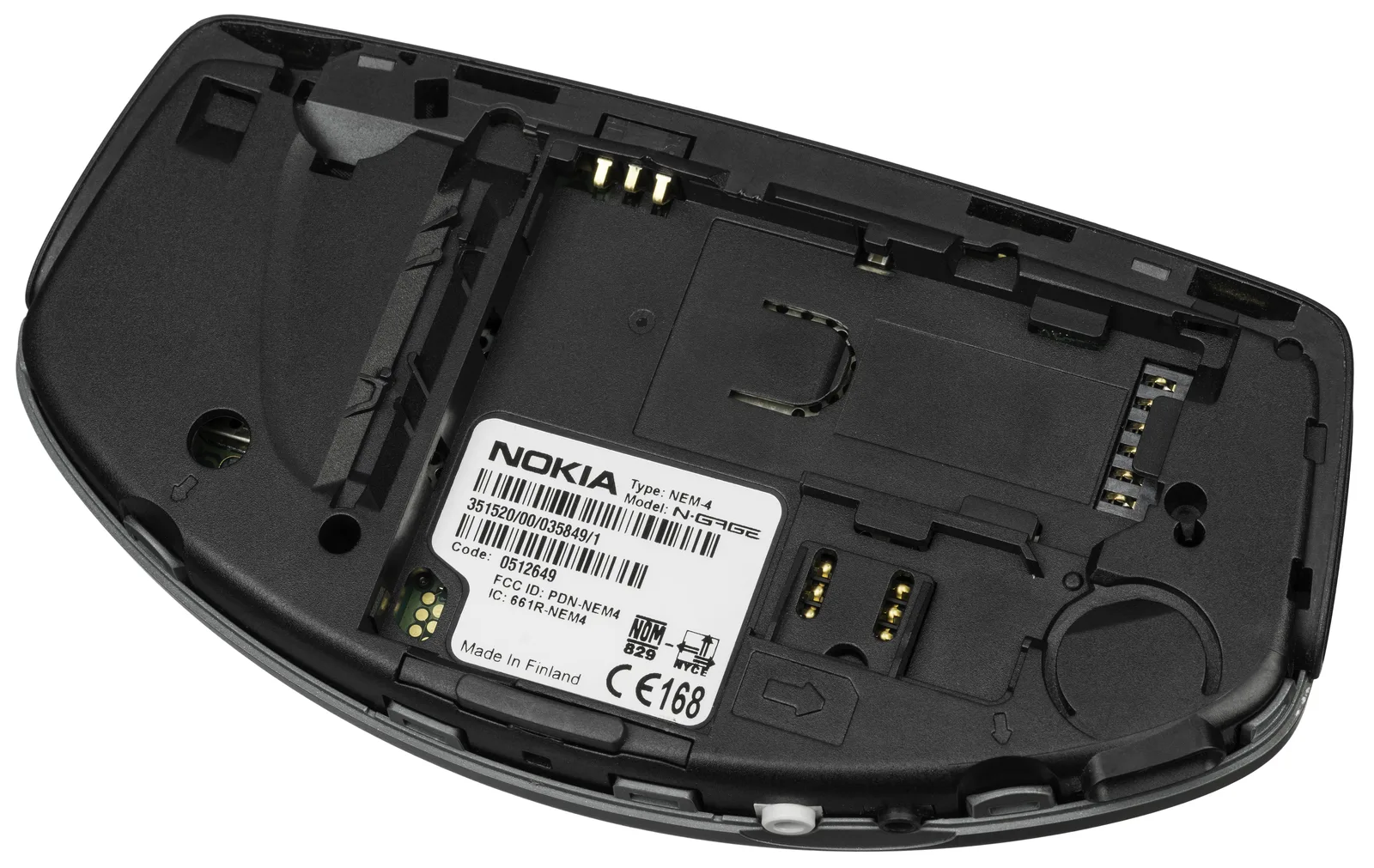
The original N-Gage ran games and storage from MultiMediaCards. The slot sat under the battery, so changing a game meant taking off the back cover and pulling the battery, with no hot swap. Inside was an ARM920T processor at 104 MHz, the same clock as the Nokia 3650, a regular phone.
The screen was a 2.1-inch, 176 by 208 pixel display held in portrait. That hurt fast games like Sonic Advance. The Elder Scrolls Travels: Shadowkey had poor hit detection. Call of Duty had a low frame rate and long loading times.
Games cost about $30 each on top of the $299 phone. The Game Boy Advance had launched in North America on June 11, 2001 at $99.99. The N-Gage library ended at 58 full titles. Tomb Raider topped the first UK software chart, ahead of Super Monkey Ball and Sonic N.

Nokia's 400,000 was shipments and retailers counted about 5,000
Nokia announced that about 400,000 units sold in the first two weeks. Retail trackers had already reported roughly 500 in the UK, excluding mobile phone stores, and 5,000 in the US, counting game and phone stores, for the first week. Chart-Track said fewer than 500 units sold through the 6,000 game stores it polled, and the Game Boy Advance outsold the N-Gage almost 30 to 1 in the UK that week.
The 400,000 was a count of phones shipped to stores. Nokia blamed American consumers' "lack of familiarity" with the technology. Within 17 days of launch, GameStop and Electronics Boutique were offering $100 rebates. I read the 400,000 as a sell-in number announced as sell-through.
Nokia had projected 6 million units in three years. By January 2005 Chart-Track wrote that sales of the machine and its software had "failed to make any impact on the market at all." The Game Boy Advance family reached 81.51 million units.
The N-Gage QD cost less and dropped the MP3 player
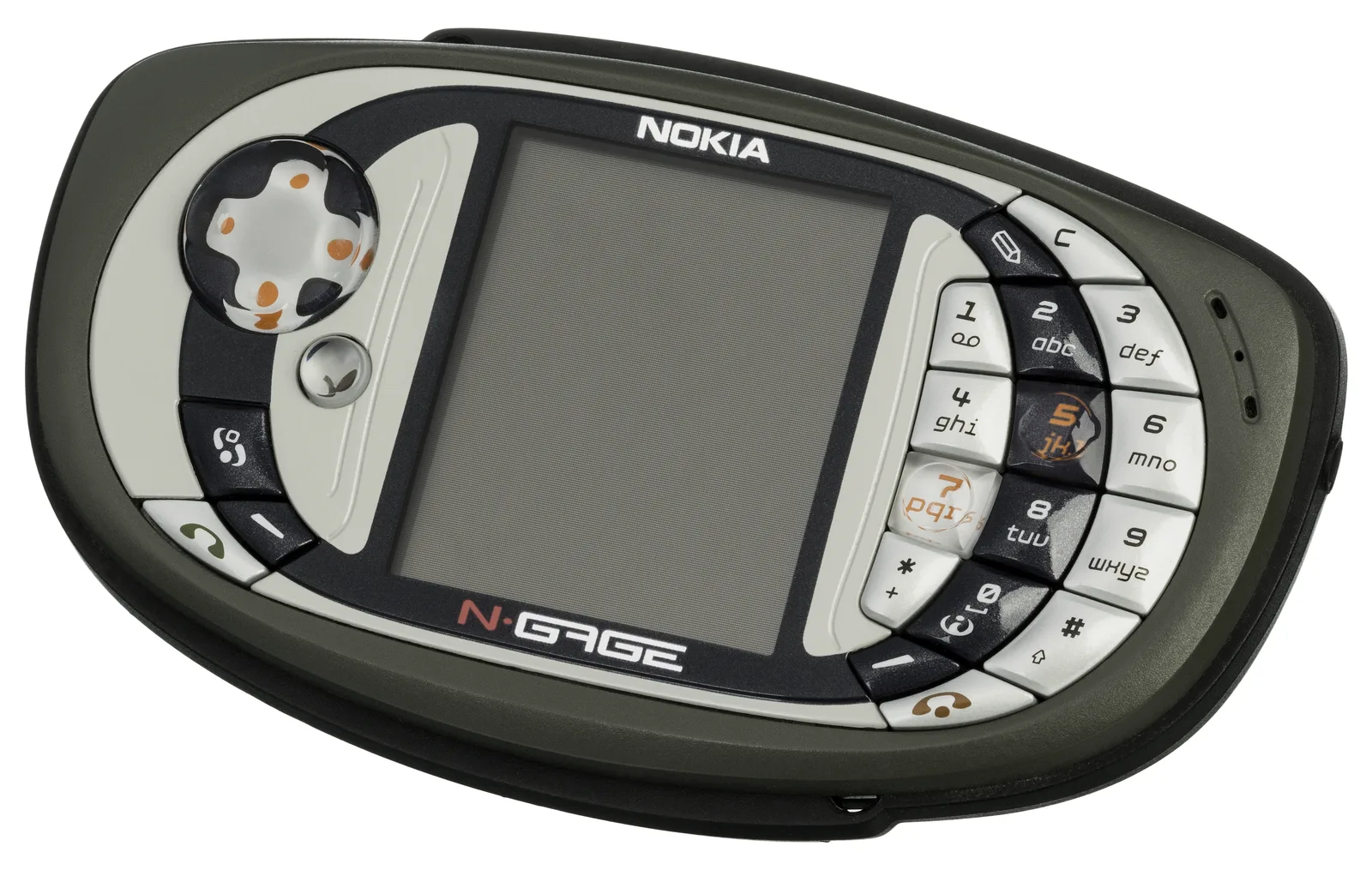
Nokia unveiled the N-Gage QD on April 14, 2004 and released it in Europe on May 26, 2004. Nokia quoted €99 or $99 with a contract and €199 or $199 without one, before tax. Raiskinen said work on it began before the original launched.
The QD was smaller and rounder. The card slot moved to the bottom, so games could be swapped with the phone on. Nokia also fixed the sidetalking. The MP3 player, the FM radio and USB were gone. The QD sold even fewer units than the original.
Nokia's best games arrived after the reputation was set
Pathway to Glory, published by Nokia, is a turn-based World War II strategy game developed by RedLynx and released in North America on November 24, 2004. It scored 83 on Metacritic. Multiplayer worked on one phone passed around, or online through N-Gage Arena, Nokia's own service with forums and tournaments. Pocket Kingdom: Own the World also drew a handful of glowing reviews. Pathway to Glory came out more than a year after launch. Strategy is my genre, and I think Pathway to Glory deserved a better machine.
After 2005 the N-Gage became a service for other phones
Nokia ended Western sales on November 26, 2005, while it kept making the handset for the Indian and Chinese markets. The last US game, Civilization, came out in March 2006.
The name came back. N-Gage 2.0 was a games service for Symbian S60 phones, with a full release on April 3, 2008. The launch phones were the Nokia N81, N82 and N95. On October 30, 2009 Nokia said it would make no new N-Gage games, and the online features ended in September 2010.
You can play N-Gage games today in an emulator
EKA2L1 is a Symbian emulator that runs N-Gage games. Its Android app reached Google Play in April 2021. It runs best on 64-bit Android devices. The emulator needs a firmware ROM dumped from a real Symbian device.
Questions people ask
Why did the Nokia N-Gage fail?
It cost $299 against the Game Boy Advance's $99.99. Calls meant holding the phone sideways, and changing a game meant removing the battery. The portrait screen suited few of its ports, and only 58 full games came out. Nokia's two-week figure of 400,000 counted shipments, while trackers found about 5,000 sales in the US in the first week.
What is the price of a Nokia N-Gage phone?
At launch in 2003 it was $299. Android Police gives $275 before contract fees. The QD was quoted at €99 or $99 with a contract and €199 or $199 without. Used units are sold by individual sellers, so there is no fixed price today.
What games were on the Nokia N-Gage?
There were 58 full titles, among them Tomb Raider, Call of Duty, Sonic N, Super Monkey Ball and The Elder Scrolls Travels: Shadowkey. The best reviewed was Nokia's own Pathway to Glory, at 83 on Metacritic. The last US release was Civilization in March 2006.
What were the old Nokia games?
The best known is Snake, which came on the Nokia 6110 in 1998 and was later preloaded across Nokia phones. The N-Gage got its own version, Snakes, as a free download in January 2005.
When was the Nokia N-Gage released?
The original went on sale on October 7, 2003. The N-Gage QD followed in Europe on May 26, 2004. Western sales ended on November 26, 2005.
Was there a Nokia N-Gage 2?
Not as a new console. The second hardware model was the QD in 2004. In 2008 Nokia launched N-Gage 2.0, a games service for S60 phones such as the N95, and said in October 2009 that no new games would follow.
Sources
- Nokia N-Gage (Wikipedia)en.wikipedia.org
- Game Boy Advance (Wikipedia)en.wikipedia.org
- N-Gage (service) (Wikipedia)en.wikipedia.org
- Official N-Gage Sales Figures Revealed (Game Developer)gamedeveloper.com
- Nokia's N-Gage To Launch This Fall (Game Developer)gamedeveloper.com
- Nokia N-Gage turns 20 (Android Police)androidpolice.com
- Nokia N-Gage (LPC Wiki)lpcwiki.miraheze.org
- Dismal first week for N-Gage (The Register)theregister.com
- Nokia interview (The Register)theregister.com
- Why The Nokia N-Gage Was A Complete Failure (SlashGear)slashgear.com
- A Nokia mutánsa, aminek az élével kellett telefonálni (Telex)telex.hu
- Nokia N-Gage QD officially announced (GSMArena)m.gsmarena.com
- You can now emulate the Nokia N-Gage (and Symbian) on Android (XDA)xda-developers.com
- Sidetalking makes a (slight) comeback (Global Nerdy)globalnerdy.com
- Pathway to Glory (Wikipedia)en.wikipedia.org
- Snakes (N-Gage game) (Wikipedia)en.wikipedia.org
- Snake (video game genre) (Wikipedia)en.wikipedia.org
- N-Gage handset bows out (PocketGamer)pocketgamer.com
- The N-Gage QD (Engadget)engadget.com